
A printer will be helpful for this workshop. If you do not have one, you can make it work by using your computer/phone for the reference images, but you will need to be more creative with the “twist” exercises.
I use an HP all-in-one printer, it goes through ink ridiculously fast, but prints well.
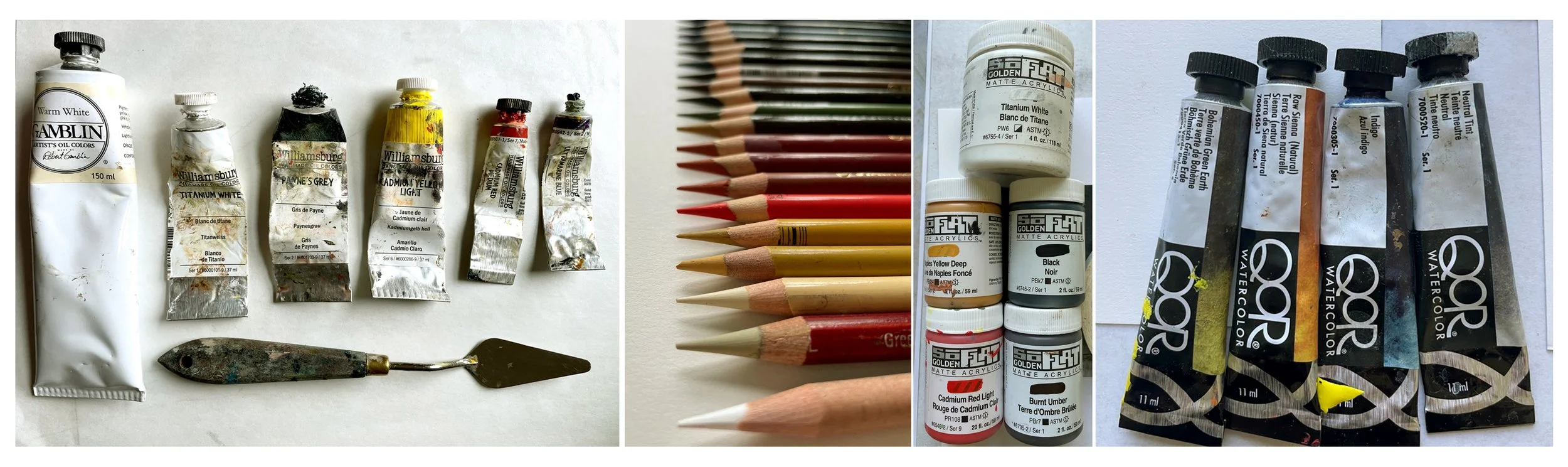
I will do my best to share the materials I use for each demo with that lesson. There might be a few supplies you want to buy, but you do not need to get everything on this list. The basics are always good to have, plus a few favorites.
Basics • pencils, eraser, scissors, glue, brushes, paint, paper, collage
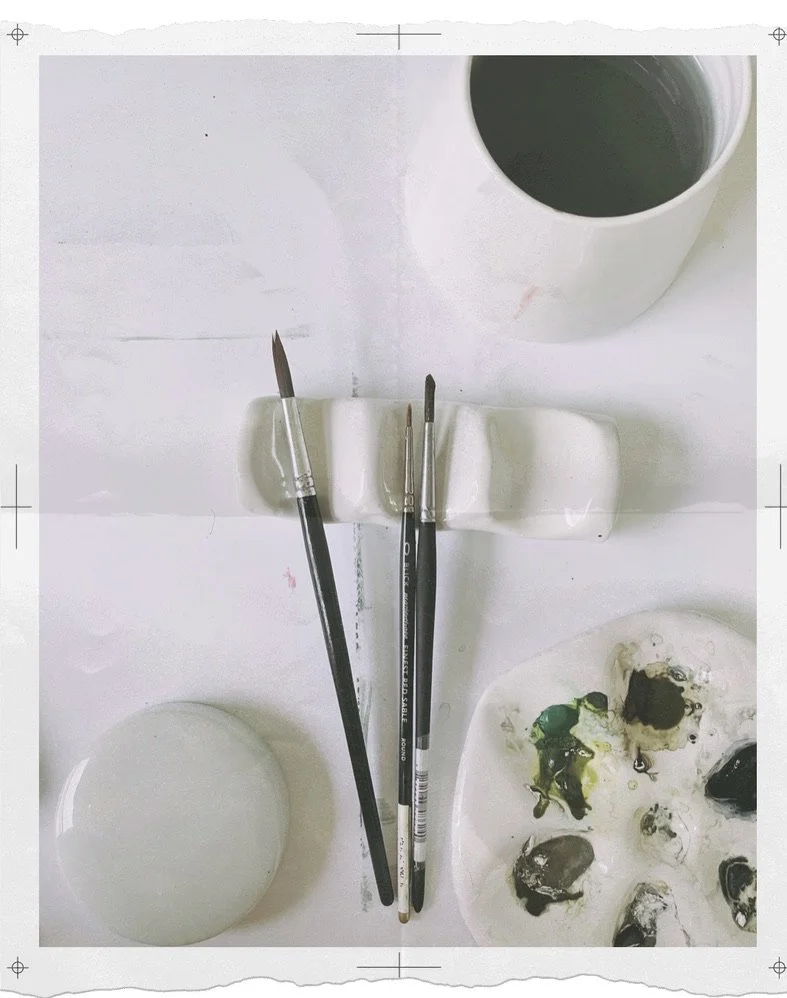
A nice set of pencils • Mixed Media Paper • Watercolor Paper • a Mechanical Pencil • Charcoal Pencils • Lyra water-soluble pencil • Black Stabilo and/or a Woody • Heavy Body Golden Acrylics are what I use the most, but any acrylics will work. • Titanium White acrylic paint • Watercolors • Gouache Paint • Oil Paints • Gamsol • Variety of Paint Brushes • Palette Paper Or a Reusable Palette • Palette Knives • PVA glue and/or a glue stick • Water-soluble Crayons • Fixative • Scraper
“Whatever the medium,
…there is the difficulty, challenge, fascination, and often productive clumsiness of learning a new method: the wonderful puzzles and problems of translating with new materials.”